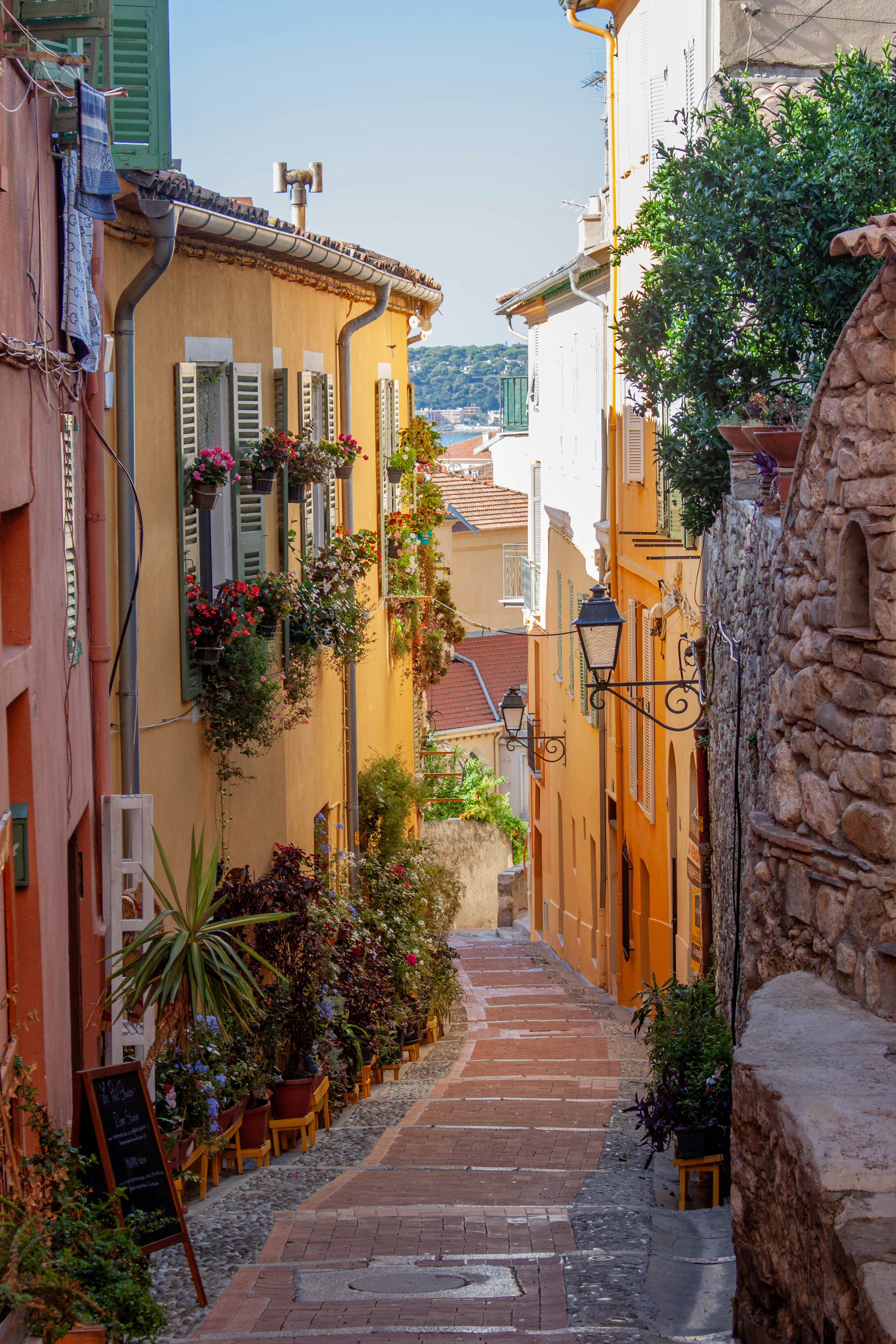
Six Hotels That Turned Minimalism into Quiet Luxury
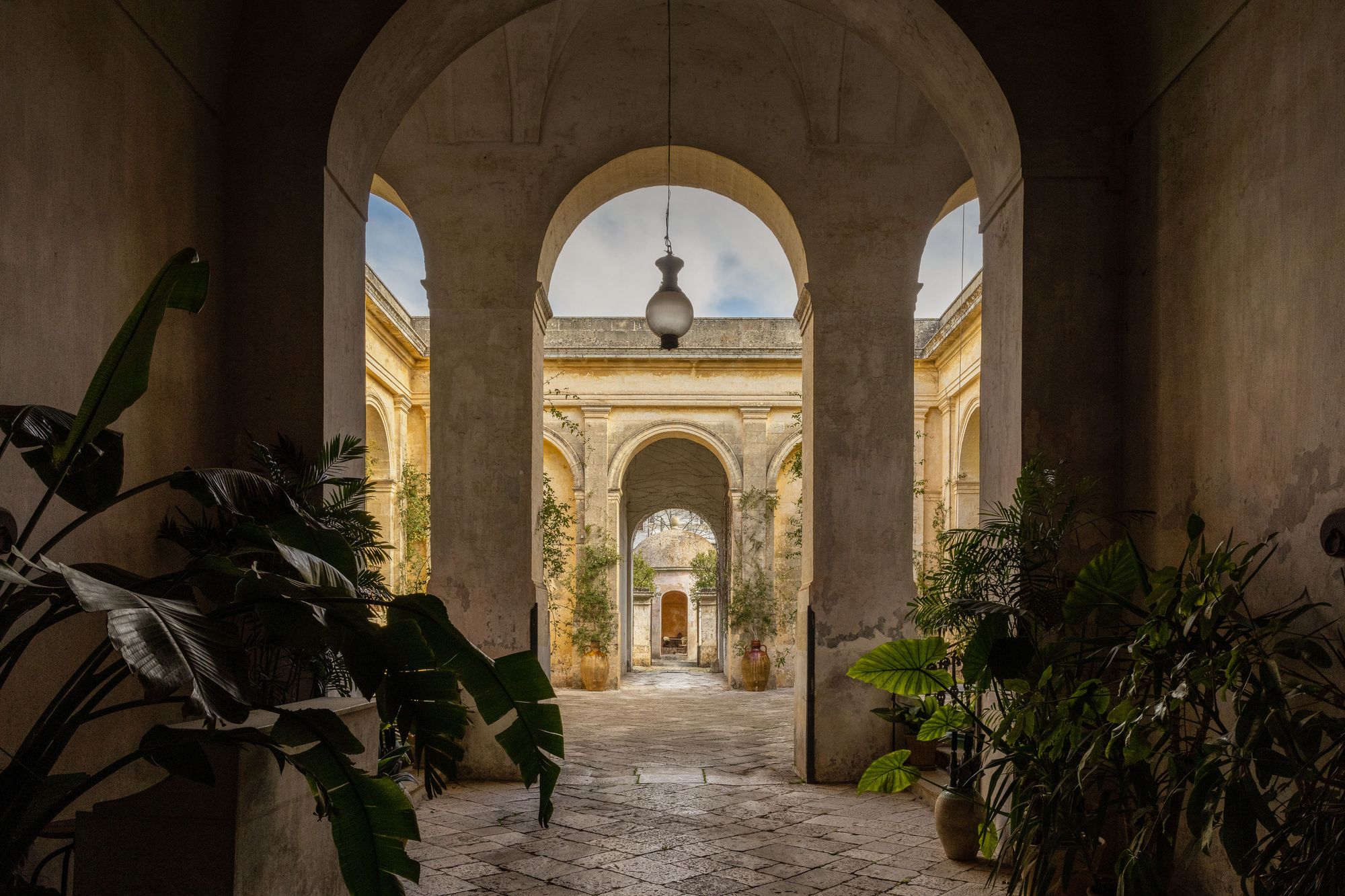
Minimalism has a reputation for being cold. White walls, hard edges, nowhere to sink into. The hotels in this edit prove the opposite. Each one strips away the usual hotel extras, and what remains is warmer, quieter and more personal than any amount of decoration could be. Old stone, whitewashed walls, oak and glass. A view framed like a painting. Fewer things, chosen better.
What connects them is not a style but an attitude: nothing is there without a reason. Sometimes that leaves room for the landscape outside, sometimes for the building itself, its old stone, its light and its proportions. Whether it is a farm estate in the Alentejo, a Norwegian valley or a palazzo in Salento, what stays with you is a feeling of calm rather than a list of features.
São Lourenço do Barrocal
Monsaraz, Alentejo, Portugal • A working farm estate near Lake Alqueva
In the foothills of the medieval hilltop town of Monsaraz lies São Lourenço do Barrocal, a 780 hectare estate that has belonged to the same family for more than 200 years. At its heart is the monte, an old farming village that in the 19th century grew into a thriving community with its own workshops, schoolroom and bullring, producing enough livestock, grain, vegetables and wine to sustain up to 50 families. José António Uva, the eighth generation of his family to live here, brought it back to life as a hotel on a working farm.
He asked Pritzker Prize winner Eduardo Souto de Moura to restore the buildings. Schoolrooms, an olive press, barns and farm outbuildings became rooms, suites, cottages and a spa, and the hotel bar now sits in a vaulted room that was once part of the olive oil mill. Interiors are by Anahory Almeida, who combined Portuguese vintage pieces with contemporary crafted furniture, and the grounds were restored with landscape architect João Gomes da Silva. Behind the whitewashed walls, the rural character of the place remains fully intact.
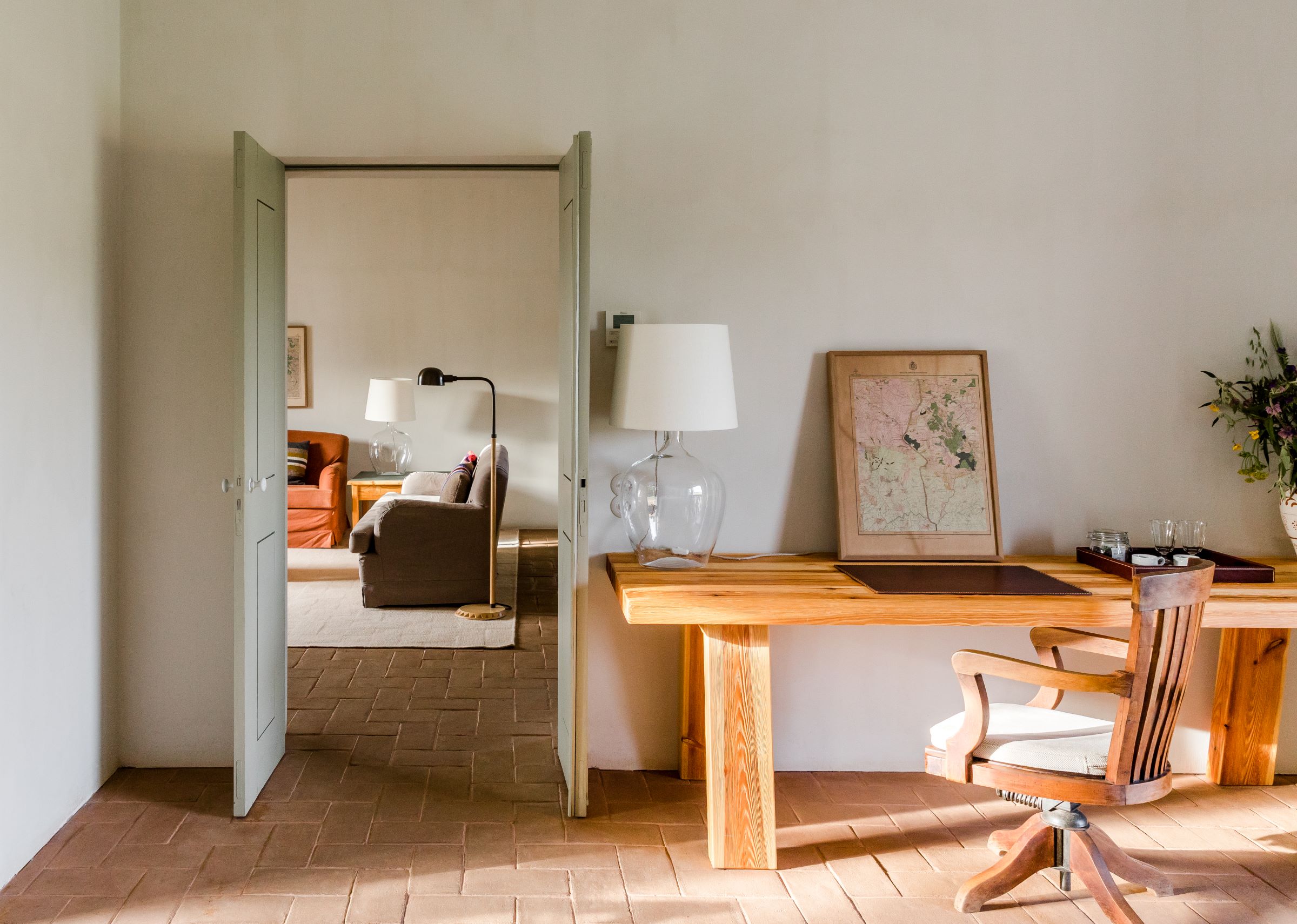
Stays range from rooms around the courtyards to suites and cottages with up to three bedrooms. The Winery Rooms lie on the path to the winery, which stands where the village once had its bakery, dairies, blacksmith, carpenters and a classroom for the children. The estate is still an organic farm, with vineyards, olive groves and a vegetable garden that supply the two restaurants: the main restaurant, focused on local culinary tradition, and Hortelão, a summer grill restaurant by the pool and the kitchen garden. There is a spa by Susanne Kaufmann, and the Michelin Guide awarded the estate a Key.
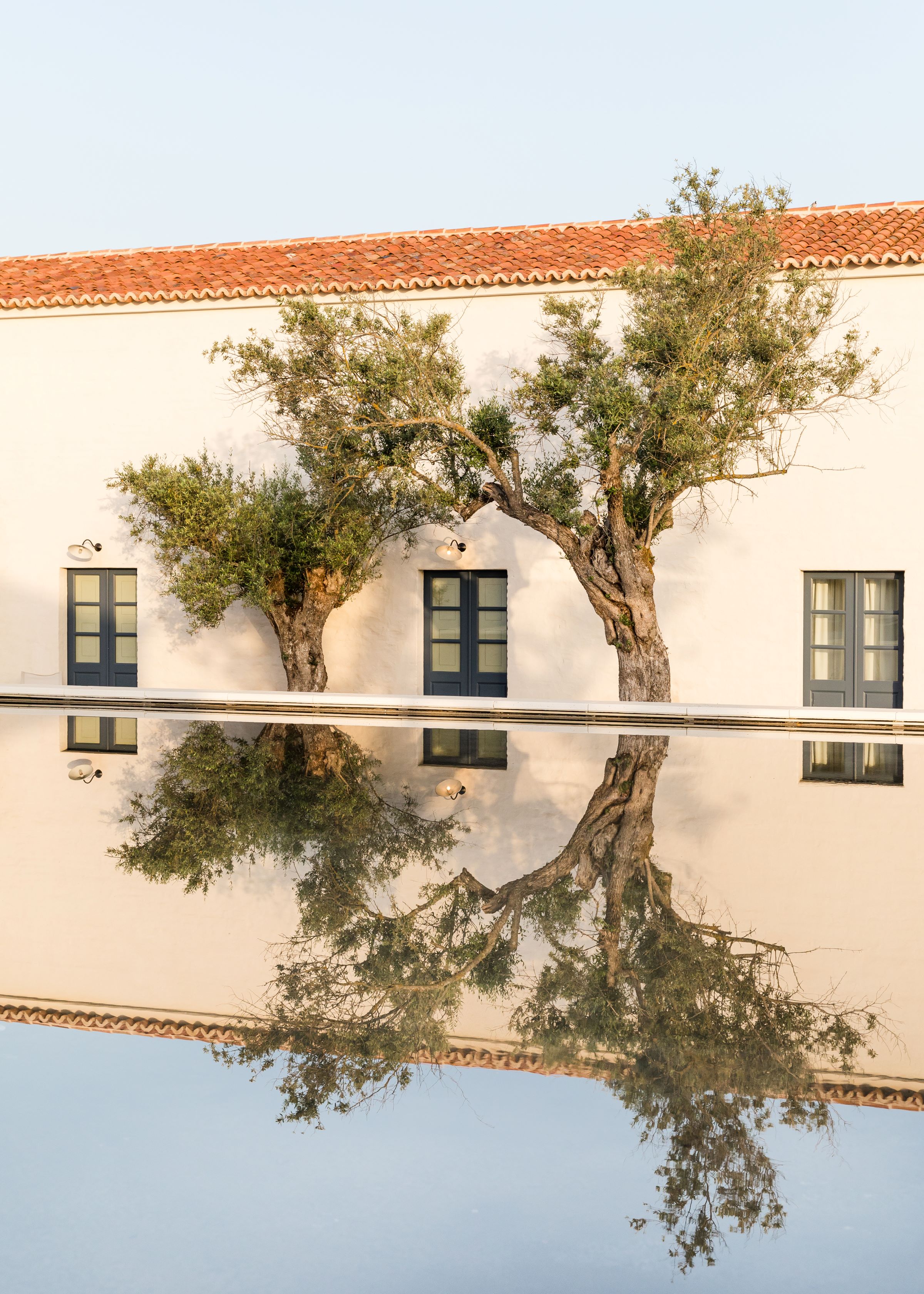
Around the estate: horse riding on Lusitano horses past the menhir, vineyards and olive groves, walks and hikes among the holm oaks, stargazing in the Alqueva Dark Sky Reserve and the estate's prehistoric dolmens. Monsaraz and Lake Alqueva are close by.
Book your stay: barrocal.pt
Hotel Sevilla
Mérida, Yucatán, Mexico • A 16th-century casona one block from Plaza Grande
In the historic centre of Mérida, the bustling White City, Hotel Sevilla occupies a corner building that was built in the 16th century as a private residence and later became a hotel. When Grupo Habita found it, it was practically a ruin. The group works with a different creative team for every property, and here it asked the interdisciplinary studio Zeller & Moye and Salomón Sacal to take on both the architecture and the interiors.
Christoph Zeller and Ingrid Moye kept the colonial façade and the original layout, and restored the original features they uncovered by carefully peeling back layer after layer. Everything new was made in in-situ concrete, a common building material in Mexico: a pool, a bar and a spiral staircase. Rather than blending these into the historic architecture, the architects gave them a clearly contemporary language, so that old and new can coexist.

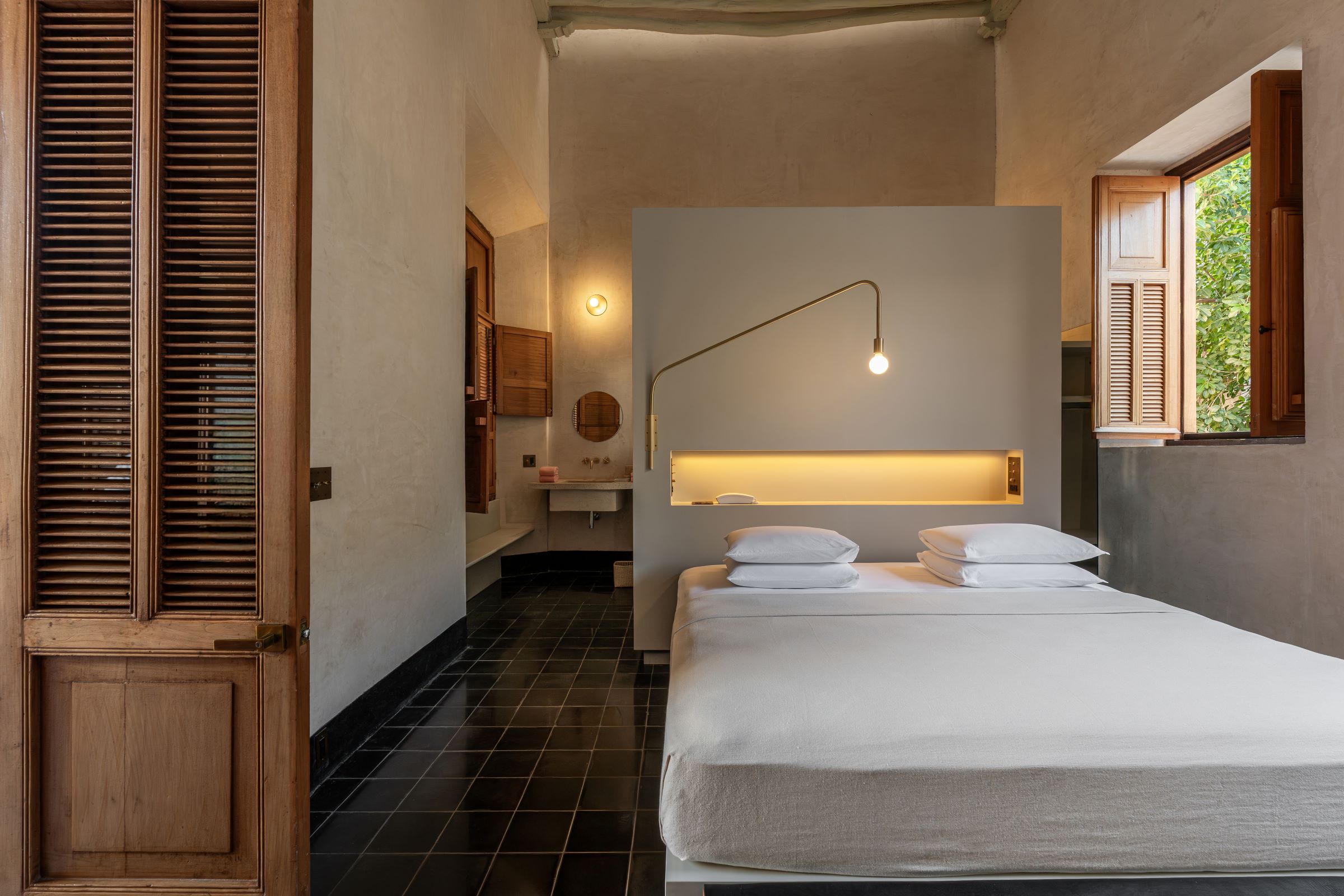
There are 17 rooms and four suites, reached through cloistered corridors with preserved tropical wood ceilings and huge plants in terracotta pots. Every room has its own shape and size, but they share one palette: polished ceramic floor tiles that reference those of typical Yucatán houses, painted black, custom Modernist-inspired furniture made from local woods, lighting by Mexican architectural designer Luca Salas and traditional woven henequen textiles. Behind the bed, the bathroom is enclosed by grey concrete walls, warmed by brushed brass accessories.
Life centres on the courtyard, where four almond trees shade a relaxed outdoor cantina. The concrete spiral staircase leads up to a 24-seat bistro serving French-Mexican breakfasts and a daily changing prix fixe dinner based on fresh produce from the nearby market, both overseen by French chef Marion Chateau. At the back of the property, the former stables have become a second, more private courtyard with a concrete pool, split into two depths by an existing stone wall with an opening to swim through. The spa adds a Tuj, a Mayan sauna, and a cold plunge.
Around the hotel: Plaza Grande, with the cathedral and Casa de Montejo, is one block away. The mansion-lined Paseo de Montejo and the Mercado Lucas de Galvez are within walking distance.
Book your stay: hotelsevilla-merida.com
Beniya Mukayu
Yamashiro Onsen, Ishikawa, Japan • A family-run onsen ryokan since 1928
Yamashiro Onsen is a hot spring town in Ishikawa Prefecture whose springs have been cherished for more than 1,300 years. Here, Beniya Mukayu has been owned and run by the Nakamichi family since it was founded in 1928. Kazunari and Sachiko Nakamichi became the third generation of owners in 1988, and today they run the ryokan together with their sons, Daisuke and Kosuke.
Its name could be the motto of this edit. Mukayu means richness in emptiness. The ryokan was given that name in 1998 by architect Kiyoshi Sey Takeyama of Studio Amorphe, who over three decades gradually transformed it into a boutique ryokan. He compared the idea to the empty time in a busy schedule: precisely because it is empty, it is time filled with freedom. Throughout the property the architecture blends with nature, the interiors embrace minimalism, and natural materials and fine details reflect the changing seasons. Since 1998 the designer Kenya Hara has also worked with the ryokan, from its logo and packaging to the art direction of various projects.

Everything is built around the Forest Garden, a mossy thicket in the centre of the property where maples, pines, camellias and Chinese quinces grow freely. Each of the 16 rooms and suites has windows that open wide onto the garden and its own private open-air hot spring bath. There are also two communal baths: Gensei, a tranquil bath for meditation, and Usukō, for purification of body and soul. The ryokan also has three libraries, each with a unique atmosphere; Spa Entei, inspired by a long healing tradition of hot spring waters and medicinal herbs; and the Kaiseki Hōrin restaurant, where dinner is a showcase of seasonal offerings from nearby fields and the sea.

As a welcome, Mr. and Mrs. Nakamichi host a private tea ceremony for guests, a tradition that earned the ryokan the Relais & Châteaux Welcome Trophy in 2013. Beniya Mukayu also holds a Michelin Key.
Around the ryokan: Yamashiro Onsen is a 5-minute walk away, and Kakusenkei Gorge in Yamanaka Onsen, with its riverside walking path, is about a 15-minute drive. Kanazawa, known for its samurai culture, is 20 minutes away by Shinkansen, Tokyo about 2 hours and 50 minutes, and Kyoto about 2 and a half hours.
Book your stay: www.mukayu.com
Juvet Landscape Hotel
Valldal, Norway • Open early March to early November
Juvet sits on the old Burtigarden farm in the Valldal valley in western Norway, in a birch forest between a foaming river and high mountains. It lies close to the Gudbrandsjuvet gorge, on the Norwegian scenic route between the Geiranger Fjord and Trollstigen. Founder Knut Slinning had no experience in hospitality. He wanted to build something that interfered with nature as little as possible.
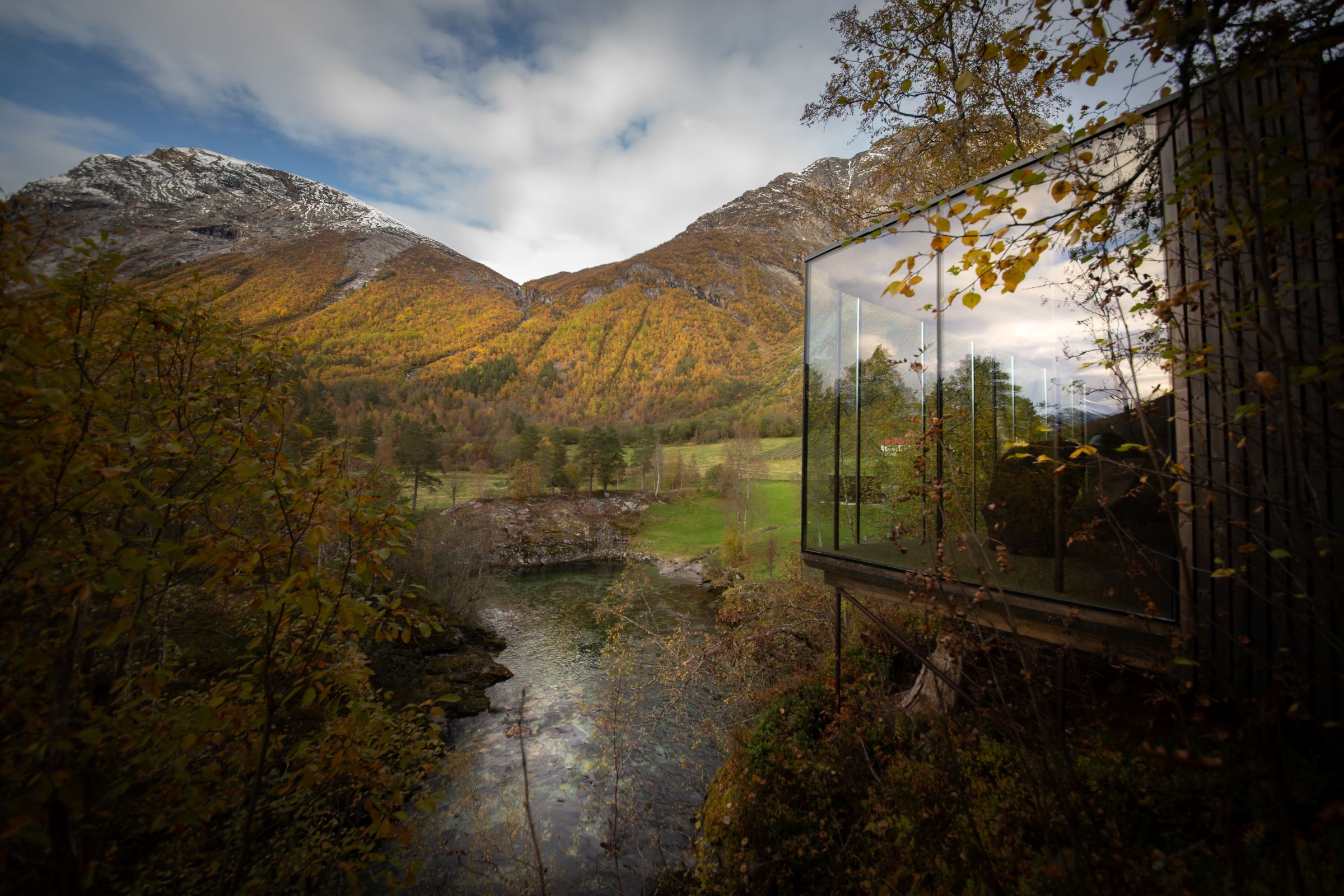
Architects Jensen & Skodvin designed the hotel as a series of separate buildings rather than one. The seven Landscape Rooms are small cubes on stilts, so the ground beneath stays undisturbed, and each has one or two walls entirely of glass. They are oriented so that no room looks into another, which means there are no curtains. The interiors are deliberately dark so nothing steals focus from the view of the valley, the forest or the river. If the place looks familiar, it may be from the film Ex Machina or the final season of Succession.
Life here is simple and shared. Every evening at 19:30 a three course dinner is served at a long table in the old cow barn, with ingredients from local farms and producers. The Bath House, built into the riverbank behind a 15 metre glass wall, has a steam room, a wood-fired sauna, a hot tub and a silent room. The hotel holds a Michelin Key.

Around the hotel: hiking, climbing, rafting and fjord sightseeing, with the Geiranger Fjord and Trollstigen nearby. Weekend stays require a minimum of two nights.
Book your stay: juvet.com
The Rooster
Antiparos, Greece • Sixteen houses by Livadia Beach
Antiparos is one of the smaller Cyclades islands, and The Rooster sits by Livadia Beach, a wilder stretch of coast known as the best spot on the island for sunset. Founder Athanasia Comninos created it as a place inspired by the simplicity of Cycladic life, where the distractions of everyday life fall away. Local architects VOIS designed the houses, taking their cue from the island's humble katikies, or farmer's cottages, and its dry-stone walls.
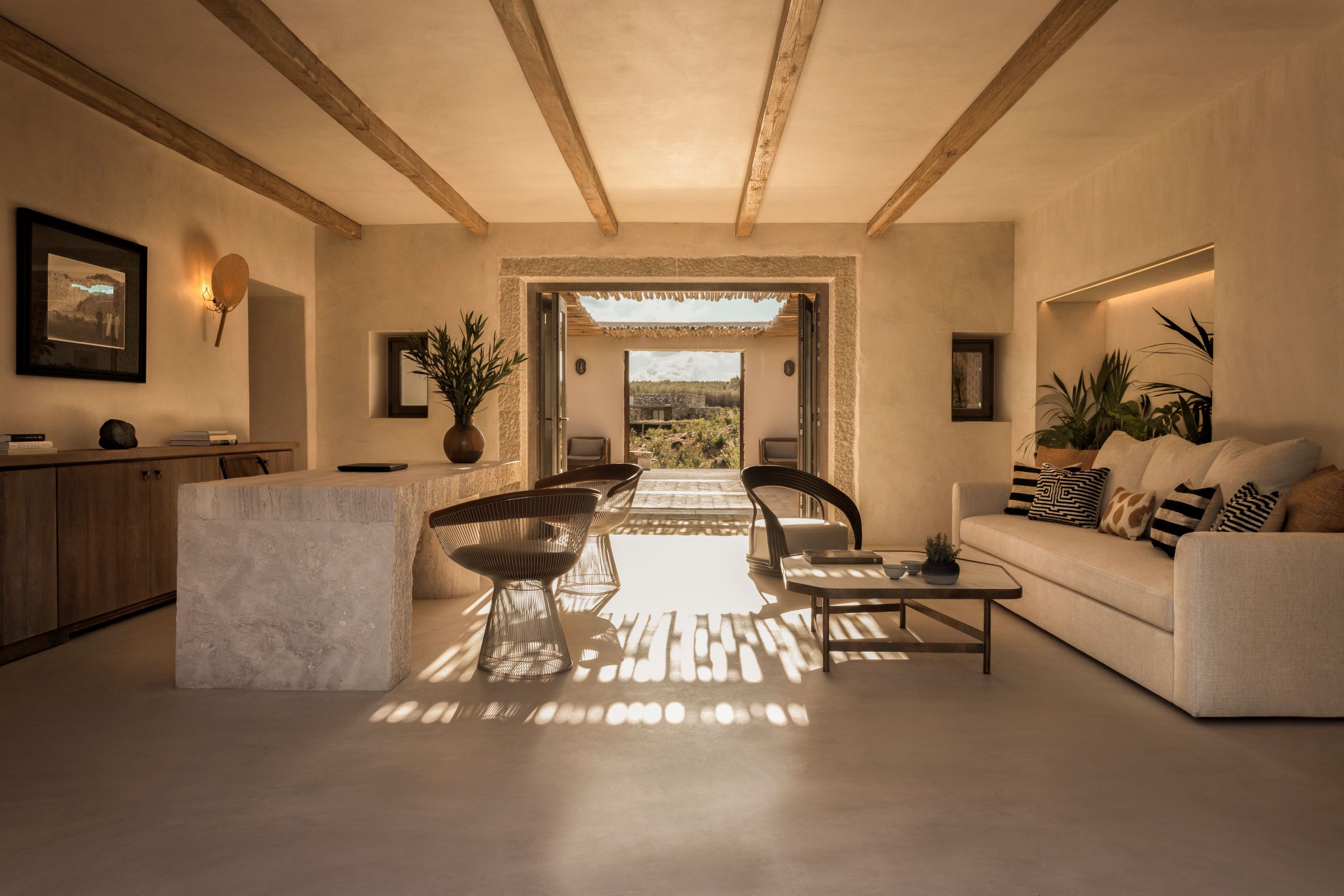
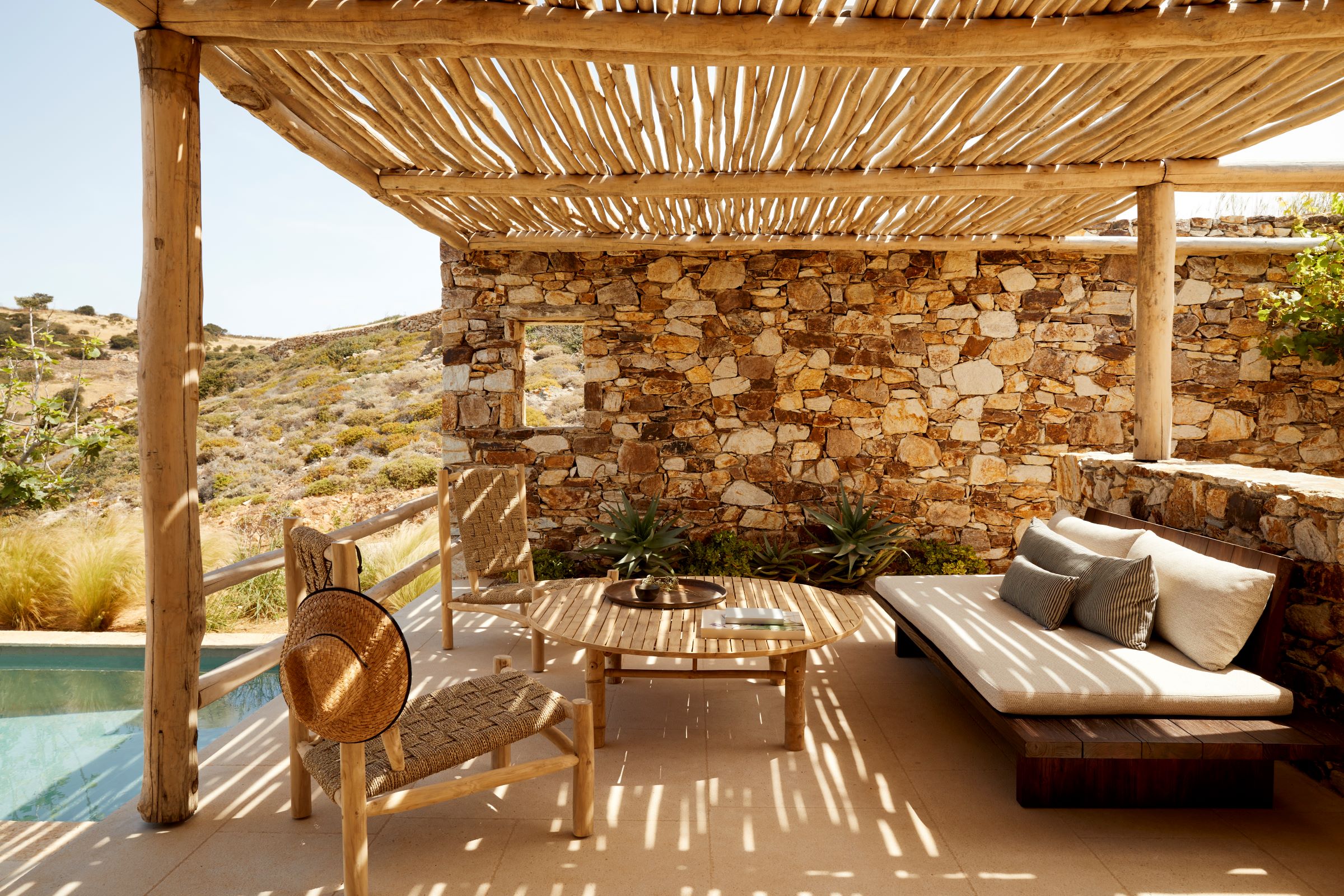
There are no rooms or suites here, only sixteen low houses scattered among gentle hills, untamed gardens and golden sand dunes, so the hotel almost melts into the landscape. They are built from local stone and pressed plaster the colour of sand, and each has generous indoor and outdoor living areas, a private pool and an outdoor shower. Inside, the look is understated and a little nomadic: Balinese daybeds, velvet ikat cushions, driftwood four-poster beds, linen kimonos and hand-blown glassware.
Wellness is at the heart of the stay. At the House of Healing, every treatment starts with a personal consultation, and the offer ranges from Ayurveda to sound healing, with a complimentary yoga class for guests every morning. Much of the food comes from The Farm, the hotel's organic garden and open-air kitchen, where guests can also join cooking classes and ceramics workshops. Or head out on a traditional wooden kaiki with a local fisherman and have your catch turned into fish soup on your return.
Around the hotel: sandy, sheltered beaches, a cave you descend by some 400 steps, the harbour town with its Venetian castle, and boat trips to the ruins of the temple of Apollo on the islet of Despotiko.
Book your stay: theroosterantiparos.com
Palazzo Daniele
Gagliano del Capo, Puglia, Italy • Open April to October
Behind an understated façade on Corso Umberto I in Gagliano del Capo, at the very tip of the heel of Italy, stands a palazzo built in 1861, the same year Italy became one country. It was designed by local architect Domenico Malinconico and served as a family residence for four generations. Today it is run by Francesco Petrucci, the last descendant of the family that built it and the founder of the Capo d'Arte festival, together with Roman hotelier Gabriele Salini. It welcomed its first guests in April 2019.
Rather than filling the rooms, they emptied them. Francesco removed the old furnishings, and Milanese designers Roberto Palomba and Ludovica Serafini stripped away everything that hid the original structure. What remains are frescoed 19th-century ceilings, mosaic floors and bare walls, a quiet backdrop for a contemporary art collection with site-specific works such as a lamp by Luigi Presicce, stools by Nicolas Party and a sculpture by Roberto Cuoghi. The most striking space is the Black Suite, an 85 square metre penthouse reached through an old secret door and a stone staircase, with a 1,500 square metre private terrace that circles the central courtyard.
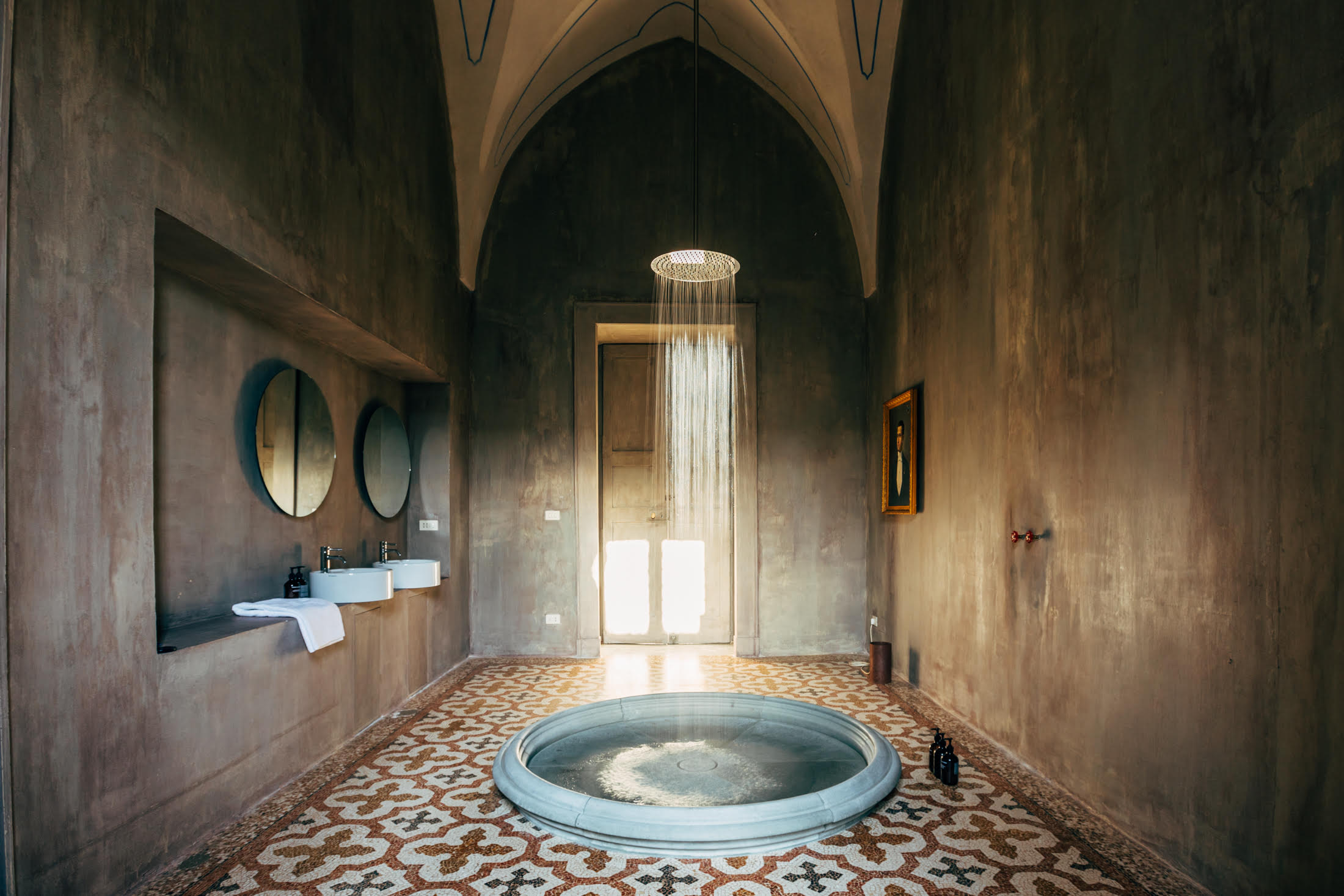
With just 15 suites, the palazzo feels more like a private residence than a hotel. Days revolve around the courtyard garden of orange trees, the pool and the spa, and the kitchen, where four local women cook according to Salento and Apulian traditions with produce that farmers bring to the house every day. Cooking classes can be booked with a little notice. The Michelin Guide awarded it a Key.
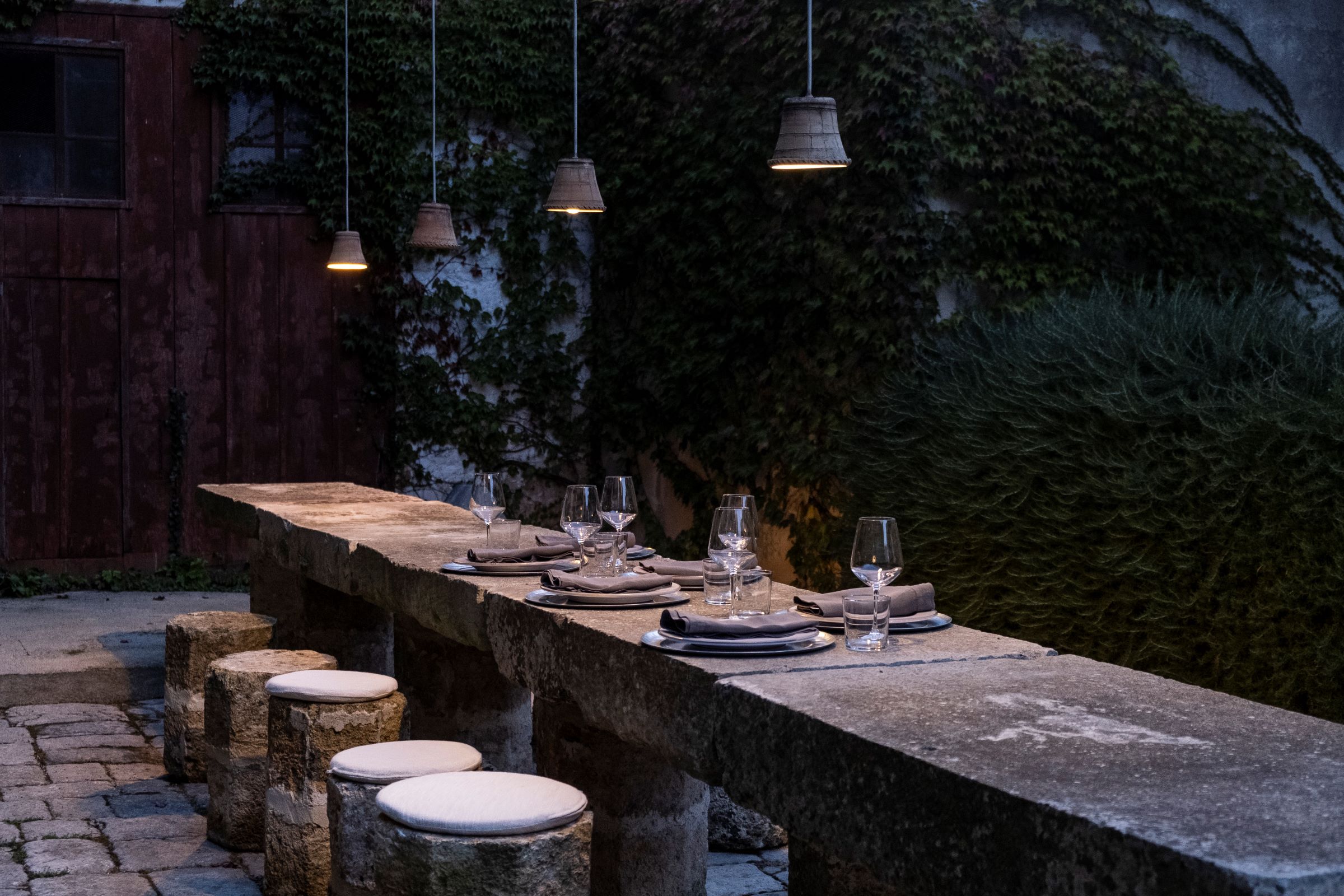
Around the palazzo: biking and trekking in the countryside, kitesurfing and horse riding along the local beaches, and Santa Maria di Leuca, where the Adriatic meets the Ionian Sea, close by.
Book your stay: palazzodaniele.com
Why they stay with us
None of these hotels try to impress with more. They impress with less, and with the confidence to let a farm estate, a colonial courtyard, a forest garden, a valley, a coastline or a palazzo do the work. That is what quiet luxury really means: not a price tag, but the feeling that every single thing around you was chosen with care.
View our post on Six Hotels That Turned Minimalism into Quiet Luxury on our Instagram.
Keep reading