Colorful Cities Around the World and Where to Stay in Them
In the most colorful cities in the world, a shade is rarely an accident. It can be a royal decree, a municipal permit, a story passed down through generations, or simply the way a hillside catches the light. For anyone who travels with a designer's eye, these places read like living color palettes. Here are five of the most colorful cities in the world, each in a different country, each with its own reason to be so vividly itself.
1. Chefchaouen, Morocco: the blue city Morocco is famous for
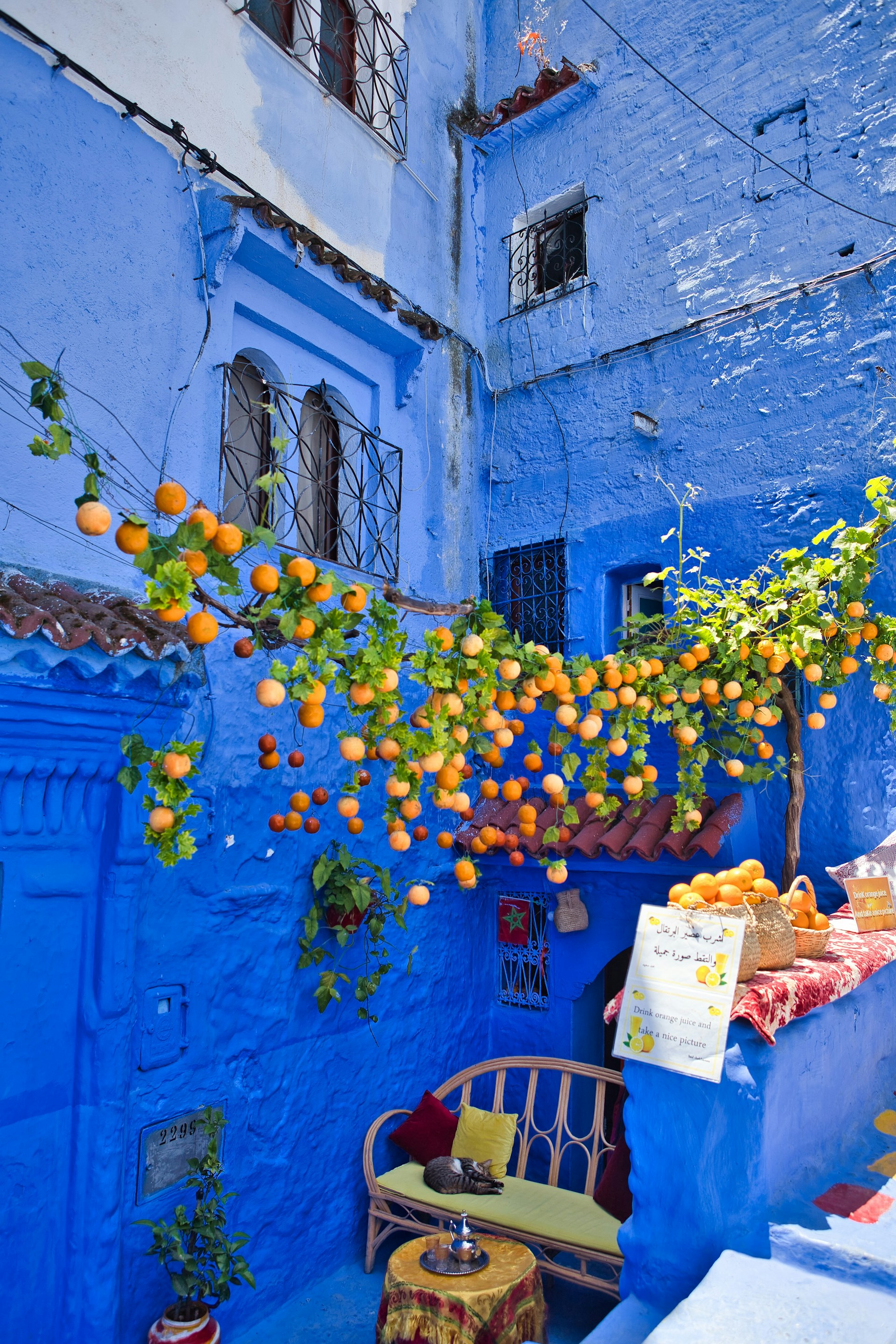
On the slopes of the Rif Mountains, Chefchaouen is the blue city Morocco is known for around the world. Founded in 1471, its medina is a maze of staircases, doorways and narrow lanes in shades from powder blue to deep indigo.
Why it's blue: there is no single answer, which is part of the allure. The most common explanation links the color to Jewish communities who painted the Mellah, the Jewish quarter, blue as a symbol of the sky and heaven. Other stories say it keeps mosquitoes away, and some locals say it was later encouraged to attract tourists. Historical photographs suggest the blue spread gradually.
Type of color: a painted tradition rather than a law, with walls, doorways and stairways in every shade from pale powder blue to deep indigo.
Best photo spot: the painted stairways of the medina for the classic blue city Morocco shot, then the roughly 30-minute walk up to the Spanish Mosque for sunset.
Where to stay: Lina Ryad & Spa - Sleep in the heart of the blue city Morocco, with rooftop views over the medina.
2. Jaipur, India: the story behind the pink city Jaipur
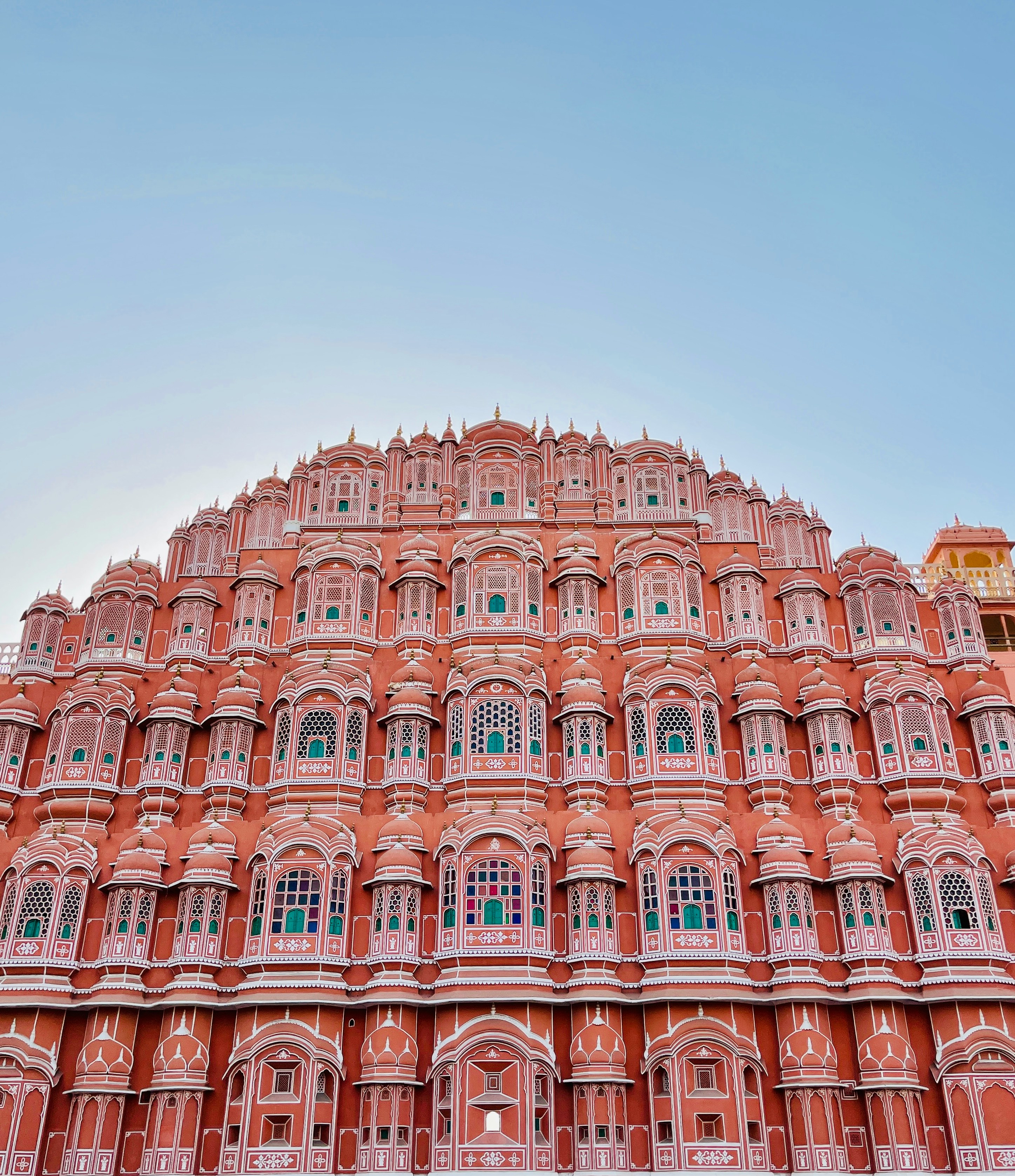
The pink city Jaipur owes its hue to royal hospitality. In 1876, ahead of a visit by the Prince of Wales (later King Edward VII), Maharaja Sawai Ram Singh II had the city painted terracotta pink, a color associated with welcome.
Why it's pink: according to widely told accounts, a law followed in 1877 requiring buildings in the old city to keep the color, a rule still reported to be in effect. The result is one of the most cohesive streetscapes among the most colorful cities in the world.
Type of color: one terracotta pink across the old city, set by royal decree and echoed in the pink sandstone of Hawa Mahal.
Best photo spot: Hawa Mahal, the Palace of Winds, built in 1799, with its honeycomb facade of 953 small windows. For the head-on view, go to the rooftop of the Wind View Café directly opposite in early morning light.
Where to stay: Hotel Diggi Palace - A heritage palace with frescoed doorways and gardens where peacocks roam, in the pink city Jaipur.
3. Burano, Italy: Venice's rainbow island among the colorful cities in Europe
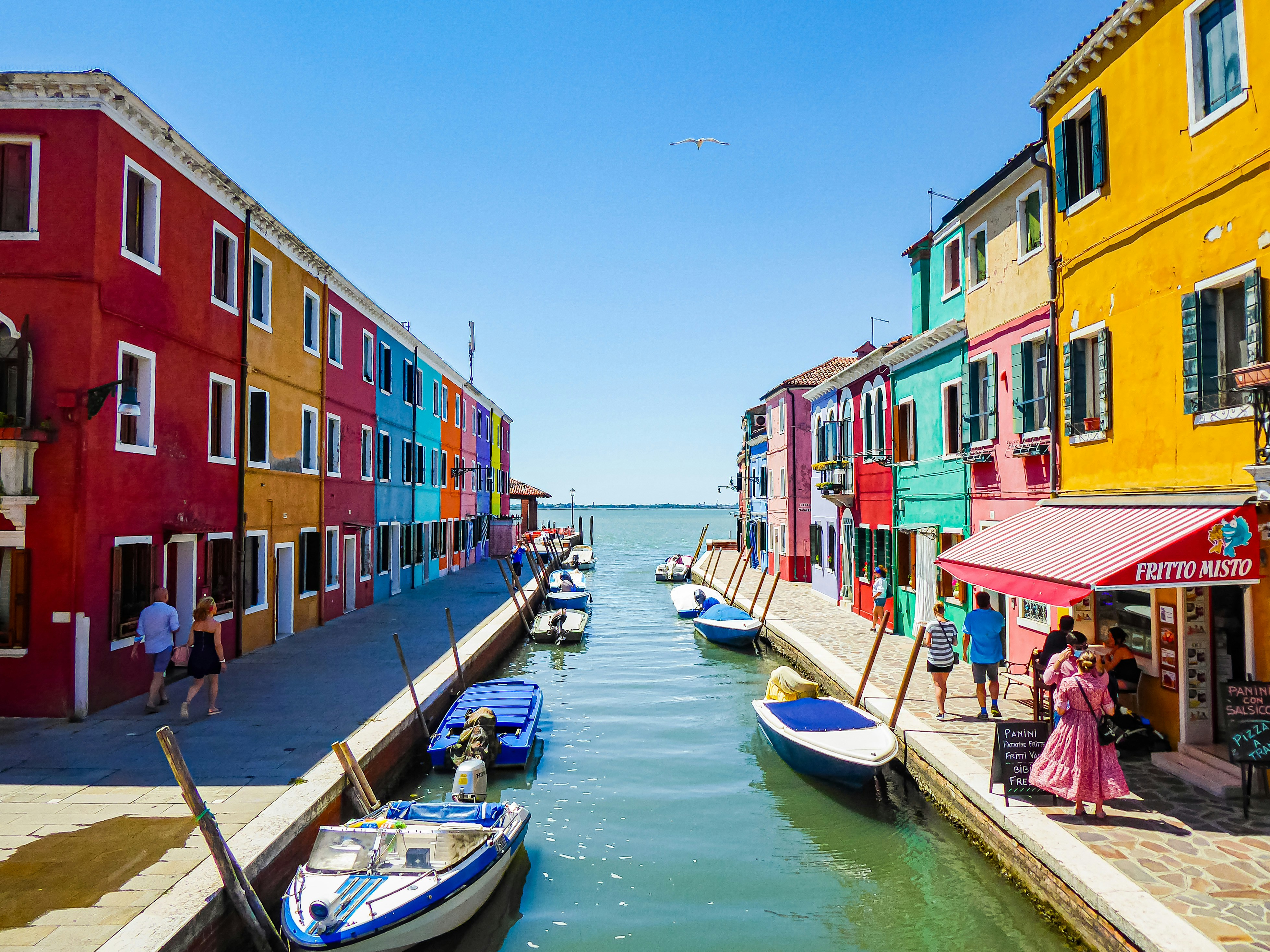
Of all the colorful cities in Europe, Burano Italy may be the most joyful. This small island in the northern Venetian lagoon, around 45 minutes by vaporetto from Venice's Fondamente Nove, lines its canals with houses in saturated yellow, blue, red and purple.
Why it's colorful: tradition says fishermen painted their homes in bold shades to recognize them through the lagoon fog. Today the palette is regulated: residents who want to repaint must request permission from the local authorities, who indicate which colors are allowed. Color here is as much civic design as personal taste.
Type of color: a regulated paint system in saturated yellow, blue, red and purple, with neighboring houses kept in different shades.
Best photo spot: Casa Bepi Suà, just behind Piazza Galuppi, where resident Giuseppe Toselli began decorating the facade with geometric shapes in the 1960s. Among the colorful cities Italy has to offer, none is quite this playful.
Where to stay: Casa Burano - Stay in one of five traditional houses with colorful facades, right on the island of Burano Italy.
4. Guanajuato, Mexico: a colorful city of silver and hillsides
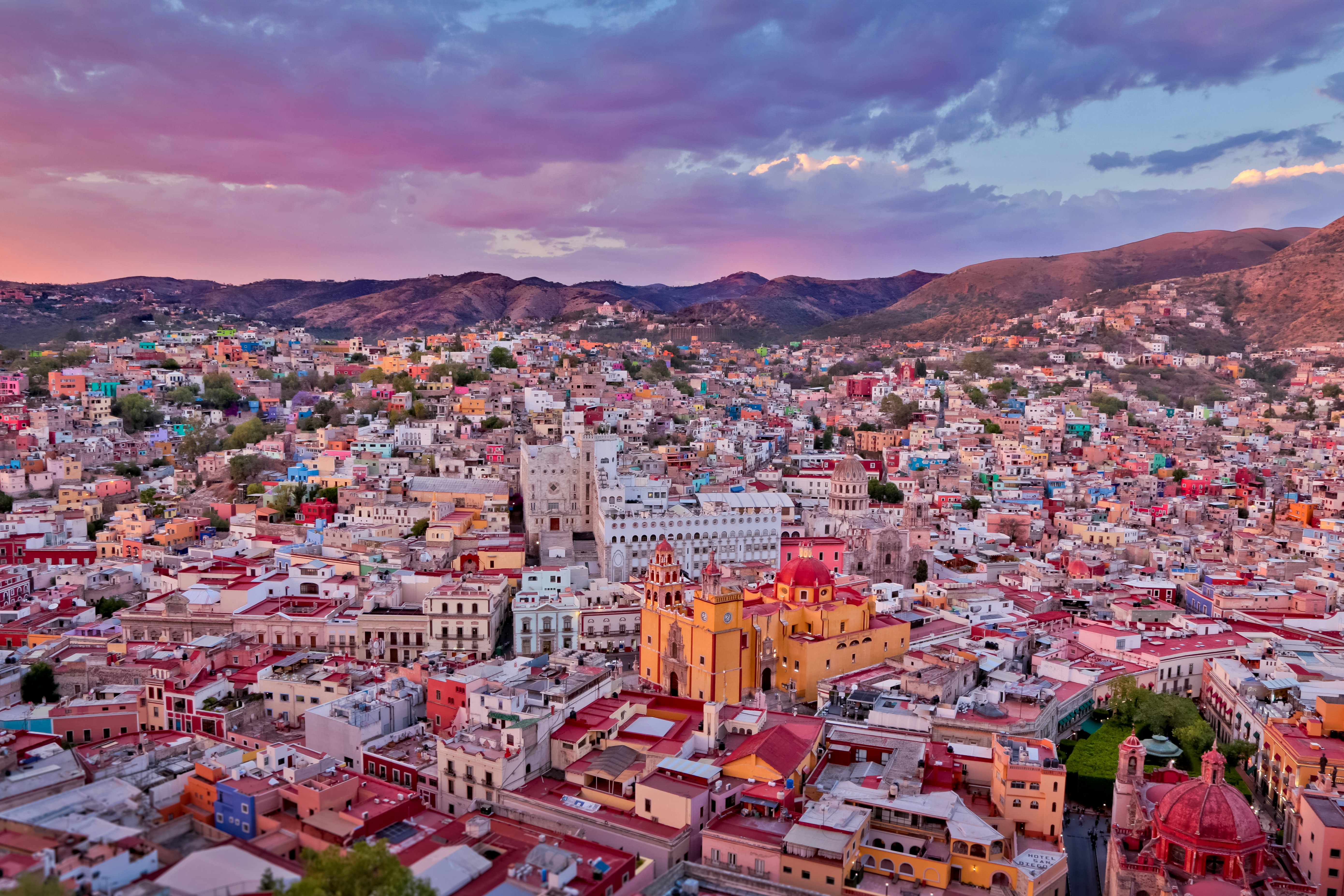
Houses in pink, blue and more tumble down the hillsides of a narrow ravine in central Mexico. Guanajuato's historic town and nearby mines became a UNESCO World Heritage Site in 1988, and for centuries gold and silver mining made it one of Mexico's wealthiest cities.
Why it's colorful: unlike Jaipur or Burano, Guanajuato's color is not tied to one famous decree. It is the layered character of a historic mining city: painted homes, the red-and-yellow Basilica of Our Lady of Guanajuato and colonial church domes rising between them.
Type of color: homes painted in pink, blue and more, set against the red-and-yellow basilica and the ochre domes of colonial churches.
Best photo spot: ride the funicular up to the Monumento al Pípila for the panorama that places Guanajuato among the colorful cities around the world, then walk down to the Callejón del Beso, where the balconies of two houses sit less than a meter apart.
Where to stay: 1850 Hotel Boutique - A boutique hotel on Jardín de la Unión with bold color schemes and a rooftop lounge over colorful Guanajuato.
5. Warsaw, Poland: rebuilt into one of the colorful cities around the world
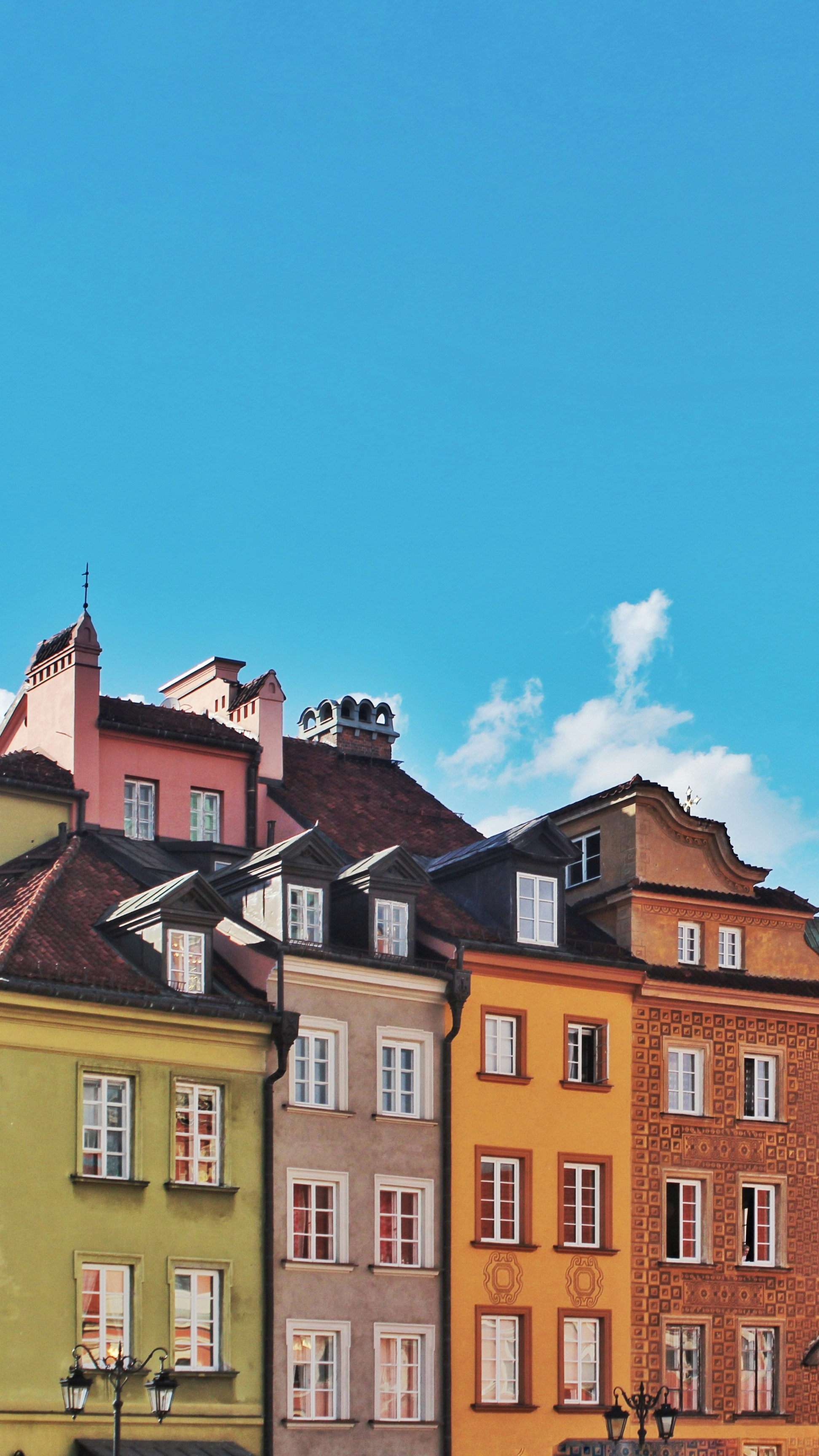
Warsaw is the quiet surprise among the colorful cities in Europe. Its Old Town Market Square, which dates back to the late 13th century, is lined on all four sides by tall, colorful tenement houses, each side named after an 18th-century Polish parliamentarian. At its heart stands the bronze Warsaw Mermaid, the city's symbol.
Why it's colorful: the color tells a story of resilience. After the Warsaw Uprising in 1944, the German army systematically blew up the square. Between 1948 and 1953 the houses were rebuilt to look as they did in the 17th century, and in 1980 the Historic Centre of Warsaw was added to the UNESCO World Heritage List.
Type of color: a row of colorful facades reconstructed after the war to their 17th-century appearance.
Best photo spot: the square itself, where the facades stand shoulder to shoulder, then the 148 steps up the bell tower of St. Anne's Church near Castle Square for a 360-degree view over the colorful Old Town. It is one of the finest views among the colorful cities around the world.
Where to stay: Mamaison Le Regina Boutique Hotel - Stay in the historic Mokrowski Palace, a short walk from the colorful Old Town Market Square.
The meaning behind the colors
In the most colorful cities in the world, color is never only aesthetic. It is a message, and the meaning behind colors shifts from one horizon to the next. Ask why cities are colorful and the answers read like a lexicon. In Chefchaouen, blue is often linked to heaven in Jewish tradition, while locals add that it keeps mosquitoes away and houses cool. In Jaipur, pink is the color of hospitality, first painted in 1876 to welcome the Prince of Wales and, by most accounts, protected by law ever since. On Burano, bright hues speak of homecoming: tradition holds that fishermen chose them to find their houses through the lagoon fog, and changing a facade still requires permission today. Guanajuato answers with abundance, a former silver city whose hillsides wear every color at once. In Warsaw, the colorful facades of the Old Town stand for rebirth, rebuilt house by house after their destruction in 1944. Read together, these stories give the most colorful cities in the world meaning beyond the photograph.
Why the most colorful cities in the world belong on your list
From the blue city Morocco keeps in its mountain medina to the pink city Jaipur built on royal hospitality, from the regulated palette of Burano Italy to the hillsides of Guanajuato and the rebuilt facades of Warsaw, the most colorful cities in the world prove that color is never only decoration. It is history, law, belief and community made visible. Two of them rank among the colorful cities in Europe every design lover should see; all five reward the traveler who looks closely. Arrive early for the light and let the most colorful cities in the world change the way you see a facade.
- Blue city Morocco: Chefchaouen's blue is a painted tradition with several origin stories, best seen in the medina's stairways.
- Pink city Jaipur: the terracotta pink dates to 1876, and Hawa Mahal is the classic frame.
- Burano Italy: repainting needs permission from the local authorities, which keeps the palette intact.
- Guanajuato: no single decree, just the layered color of a historic mining city.
- Warsaw: the Old Town Market Square was rebuilt between 1948 and 1953 and is UNESCO-listed.
View Colorful Cities Around the World on our Instagram
This article contains affiliate links. If you book through them, we may earn a small commission at no extra cost to you.
Keep reading