Villa Mabrouka: Inside the Former Moroccan Residence of Yves Saint Laurent
Tangier, Morocco • The former home of Yves Saint Laurent and Pierre Bergé, reimagined by Jasper Conran
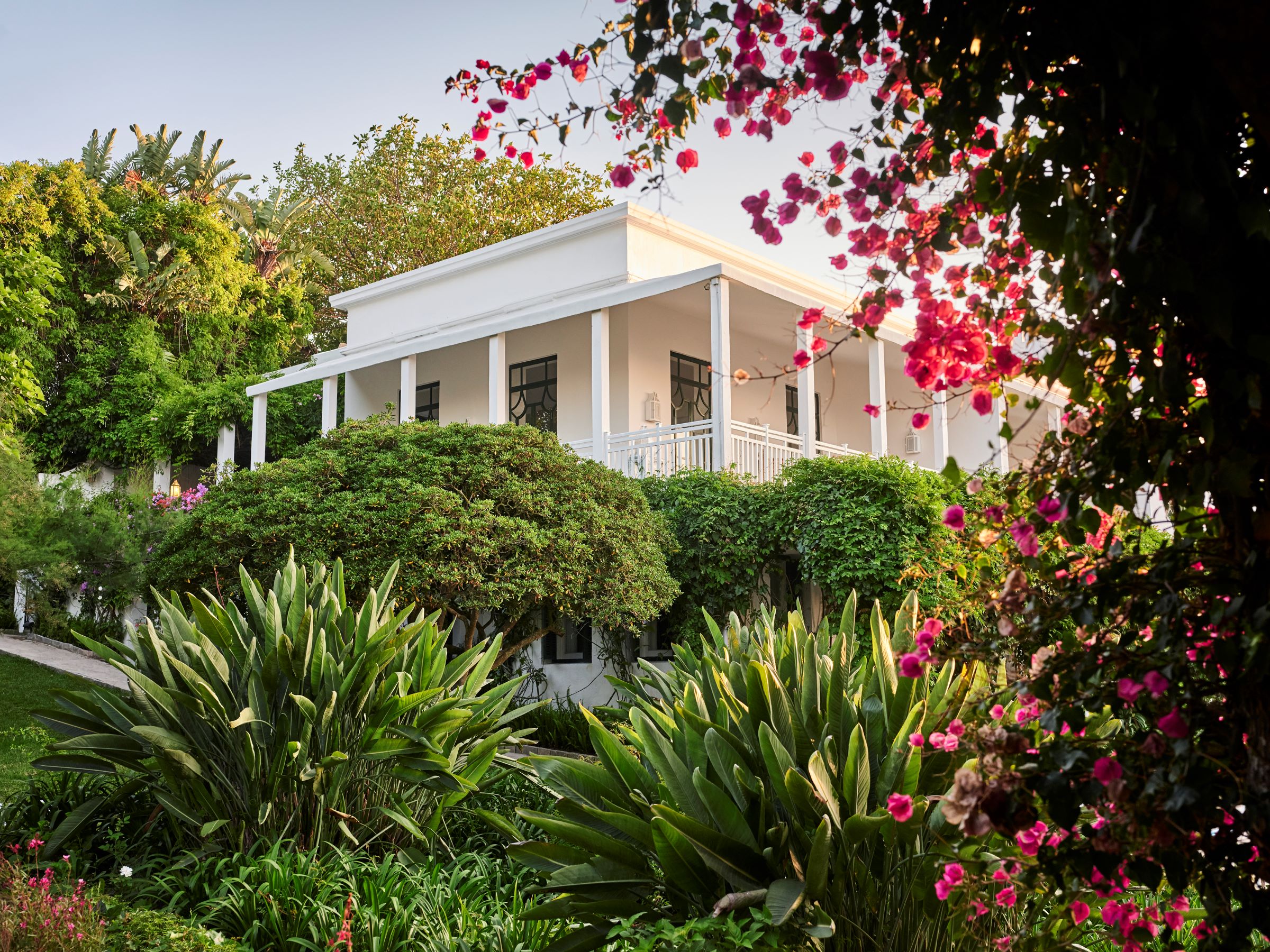
High above the Bay of Tangier, behind a pair of heavy carved wooden doors, lies one of the largest gardens in the city. In the middle of it stands a 1940s modernist house where Yves Saint Laurent and Pierre Bergé found their retreat from the shows and dinner parties of Paris. They called it Villa Mabrouka, from the Arabic word for luck and blessing. Since June 2023 it has been a hotel with just twelve rooms, and for the first time anyone can walk through those doors.
The man behind it is British designer Jasper Conran, who already owned L'Hôtel Marrakech. He did not set out to reinvent the villa. He set out to protect it.
A summer house for Saint Laurent and Bergé
Morocco inspired Saint Laurent for most of his life. He and Bergé first fell for Marrakech, where they bought Villa Oasis in 1980. Later they added a house in Tangier, on a hilltop with views across the Strait of Gibraltar to the coast of Spain. It was a place to rest between collections, with the sea on the horizon.
They asked their friend Jacques Grange, the French interior designer, to do the interiors. Saint Laurent's brief was wonderfully specific. The house should look as if an eccentric Englishman had moved to Tangier in the 1950s, with chintz everywhere and one colour per room: a blue room, a yellow room and so on. Grange later compared it to decorating a house for characters in a Tennessee Williams play. According to Conran, Saint Laurent also wanted the villa to echo the elegance of the 1940s house in Algeria where he grew up.
The first garden was designed by American landscape designer Madison Cox. In 2017, nine years after Saint Laurent's death, Bergé asked Grange to refresh the house once more. The chintz made way for rattan and thatched walls, and the bright colours for natural, earthy tones.
Found while looking for a tent
The way Conran found the villa sounds almost too good to be true. In 2019 he travelled to Tangier to look for a tent he could use for excursions with guests of his Marrakech hotel. His antiques dealer told him that Villa Mabrouka was for sale. He bought it, and turned it into a hotel over the following years.
Conran has said that working on the house made him realise how significant it was, and that the project became more about conservation than design. Much of the work is invisible: new roofing, electrics, plumbing and underground services. What you do see was added with the same care. New rooms and garden cottages, three restaurants, a rooftop terrace with a coffee and cocktail bar, a second swimming pool, a hammam and three pavilions for private dining. In the gardens he added more than 6,500 new plants, shrubs and trees.
The design: a 1940s house with an English soul
The modernist architecture of the house was left clean and simple. Floor-to-ceiling glass windows and doors let the light pour through the generously proportioned rooms and out onto the terraces, so the gardens and the sea are always part of the interior.
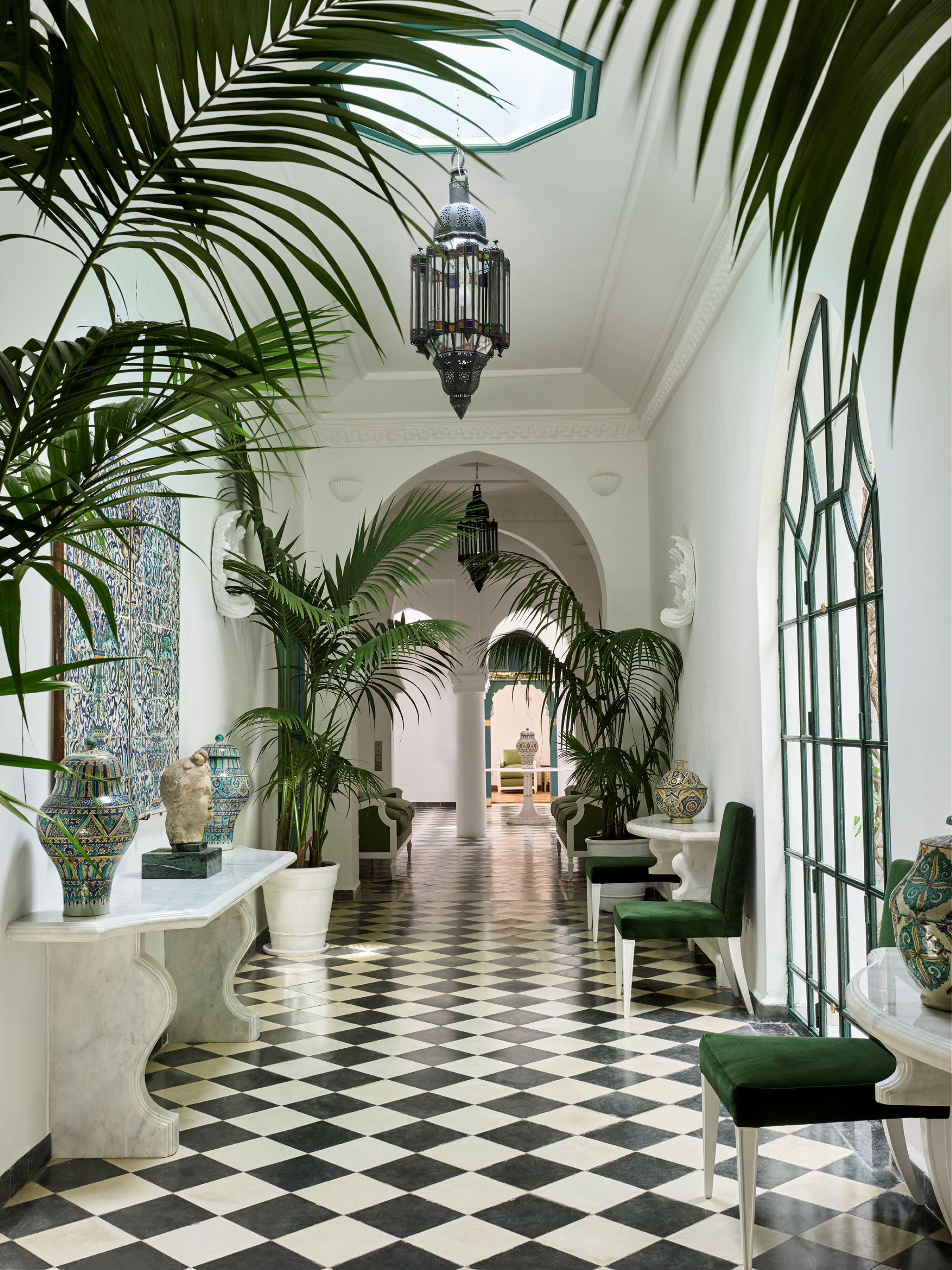
Within that frame, Conran combined three ideas. The quiet eccentricity and traditional service of an English country house. The romance of the Riviera in its early 20th-century golden age of travel. And his own taste for understatement and fine craftsmanship. You see it in the materials: flowing voile curtains, intricate fretwork, brass hardware and veined marble, next to rattan, mother-of-pearl marquetry, leather, reed rugs, antique embroideries and old tiles.
Almost everything was custom made, from the tableware and linens to the fabrics, furniture and lighting, based on Conran's own sketches or inspired by original pieces from the villa's past. His stated goal was for it to feel like staying in a home rather than a hotel.
Rooms and suites
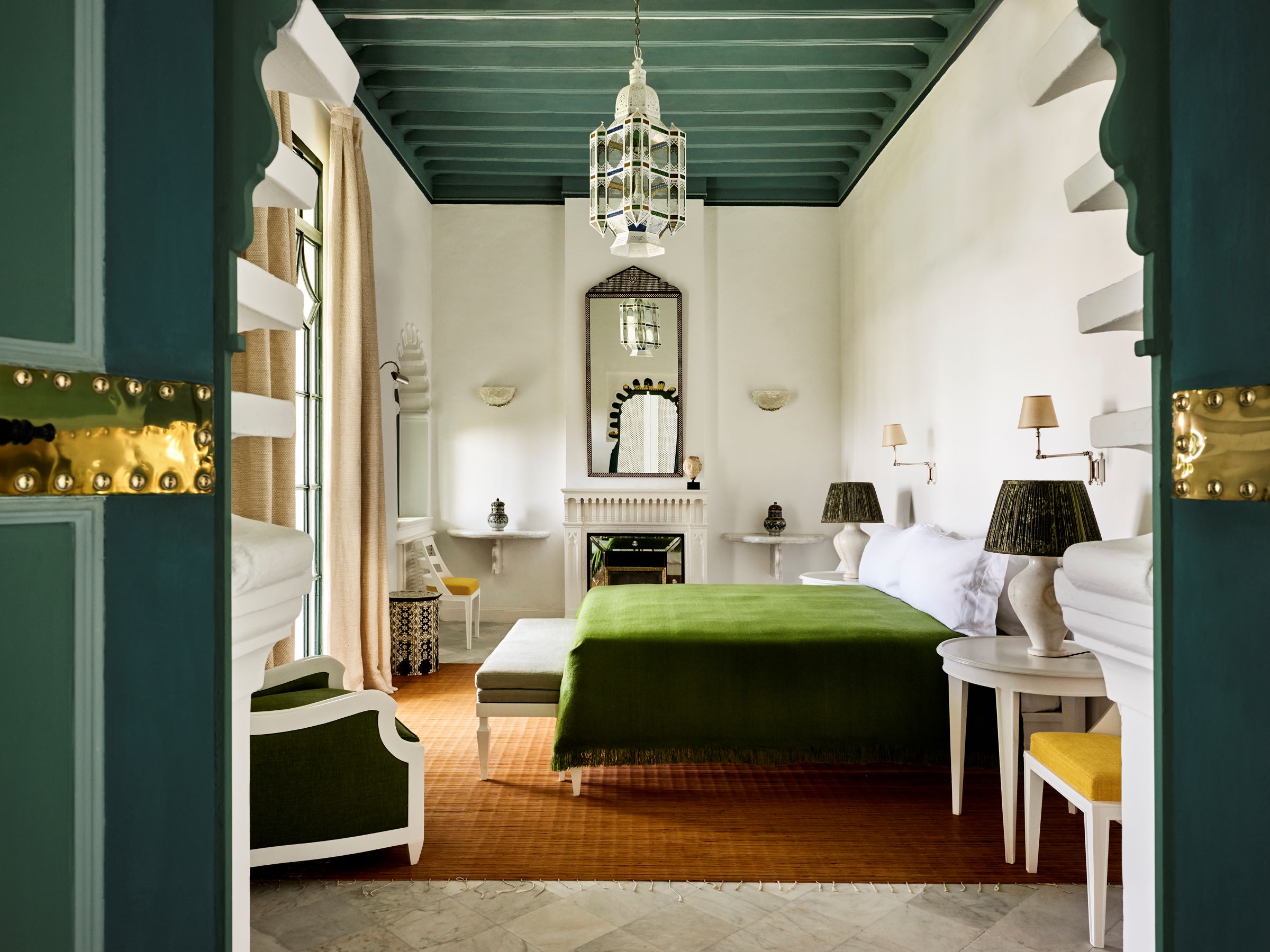
The twelve rooms and suites are named after Moroccan cities and spread across the main house and a handful of cottages in the garden. The one with the most history is Marrakech, once the master bedroom of the villa, with a large bathroom and a dressing room. Rabat has walls panelled in rattan and a bathroom in traditional zellige. Meknes has Arabesque details, high ceilings and a marble bathroom. Essaouira sits on the upper terrace of the main house, with a glazed sitting room, a fireplace and a panoramic view over the gardens, the coastline and the sea.
The garden cottages feel more like private hideaways. Tiznit has its own large terrace shaded by old trees, close to the pools. Midelt is decorated with paintings from Conran's own collection and emerald Fez embroidery, with doors that open onto a terrace surrounded by bamboo and banana trees. Ouarzazate has a sea view and a terrace with a fountain, framed by bougainvillea and citrus. Because of where they sit in the garden, the hotel does not recommend these last two for guests with limited mobility.
The gardens
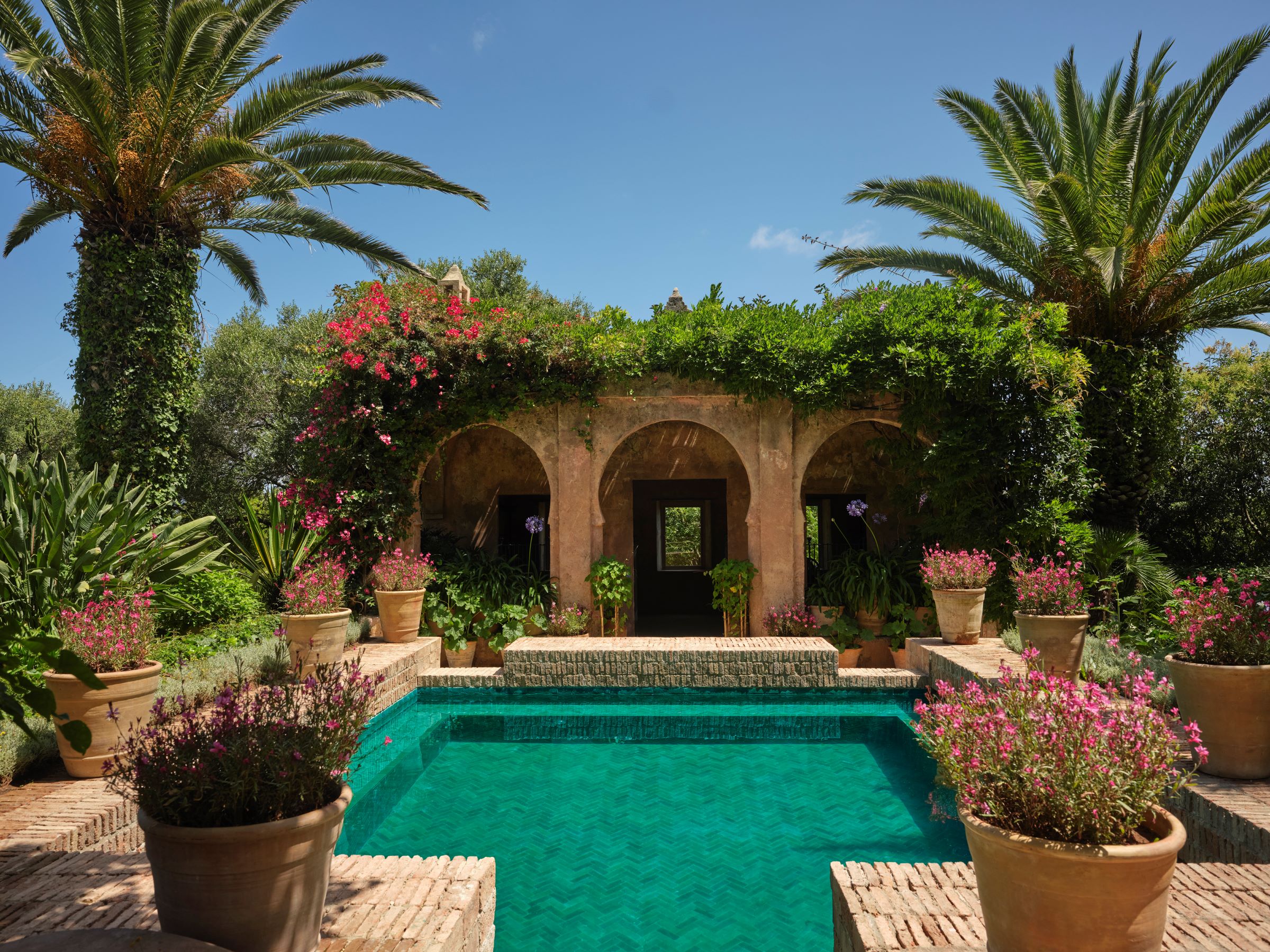
The gardens are the heart of Villa Mabrouka. They are full of banana palms, ferns, bamboo, citrus trees, hollyhocks, roses, bougainvillea and agapanthus, and filled with birdsong. The main swimming pool is carved into the rocks, with water cascading down the stone, and there is a smaller second pool as well. All of this is only moments away from the Kasbah and the Medina.
At the table
The kitchen serves an all-day menu of light, seasonal dishes built around fresh Mediterranean ingredients from the market. Think fish and seafood caught that day, simply grilled, fried as a crisp fritto misto or served in a light bouillabaisse broth. Locally grown vegetables and fruit become salads, side dishes, desserts and sorbets. Everything is made in house, down to the French breads and sweet biscuits.
There are three places to eat. L'Orangerie, on the terrace overlooking the garden and the sea, serves breakfast, lunch and dinner. The Dining Room is a warmly lit room lined with mirrors, with a bamboo clad anteroom. From April to October there is also Luca's Terrazza at the very edge of the garden, where Roman-style pizzas come out of a wood-fired oven with an unbroken view of the sea. Hotel guests can also order light dishes from the poolside kitchen.
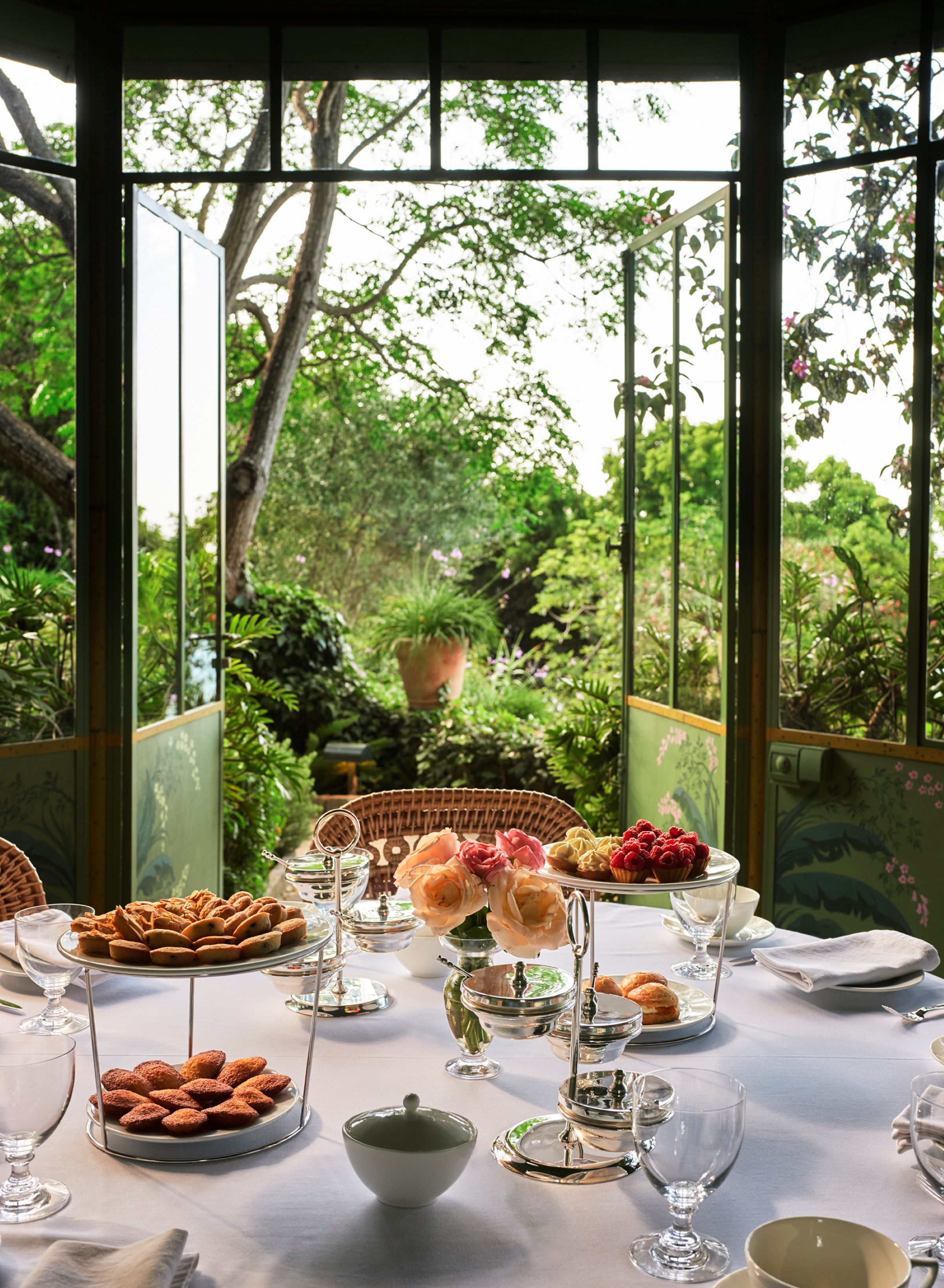
Afternoon tea, with sandwiches, pastries and a selection of teas, is served every day in the Summer Pavilion and at Elsie's Bar. For a private dinner, the Gazebo with its hand-painted interior seats up to eight, and the Pavilion d'Été, with an open fire and a view of the pool and lawns, seats up to twelve.
Cocktails at sunset
Each of the three bars has its own mood. Jake's Bar is small and cosy, with mirrored walls, Murano glass sconces and a large painting by Tetouan artist Jalid. Elsie's Bar sits on the veranda of the sitting room and serves classic cocktails, champagne and chilled rosé above the garden. The Roof Terrace Bar is the place for an aperitif at sunset, when the doves circle and the lights of the port come on. It is open to outside visitors too, although they do not have access to the rest of the villa and the gardens.
The hammam and spa
The hammam is set in honey-coloured tadelakt and marble, filled with steam and lit through ancient Roman glass. The traditional ritual starts with black Moroccan soap and a scrub with a kessala glove, followed by a layer of ghassoul, a clay from the High Atlas Mountains that leaves the skin soft and smooth. The spa also offers massages, facials, manicures and pedicures, by appointment.
Why it stays with us
Many hotels borrow a famous name. Villa Mabrouka never needs to. The story is in the house itself: in the garden Saint Laurent and Bergé created, in the rooms Grange decorated twice, and in the way Conran chose to keep rather than replace. It is not meant to be a museum. It is meant to feel like being invited into someone's summer house and asked to stay a little longer. Which, in the end, is exactly what it was built for.
Good to know
- Where: 1 Sidi Bouknadel, Tangier, close to the Kasbah and the Medina, with views over the Strait of Gibraltar.
- The hotel: Twelve rooms and suites in the main house and garden cottages, owned and designed by Jasper Conran, open since June 2023.
- Dining: Three restaurants, three bars and daily afternoon tea. Outside guests are asked to book in advance, and young children cannot be accommodated in the restaurants.
- Wellness: Two pools, a traditional hammam and a spa with massages and facials.
- When to go: Tangier has a mild Mediterranean climate with warm summers and mild winters. Luca's Terrazza is open from April to October.
- Best for: Design lovers and fashion fans who want history, a beautiful garden and very little else to do.
Discover more at villamabrouka.com and follow @villamabrouka.
Keep reading