Houndstooth: Styling This Classic at Home
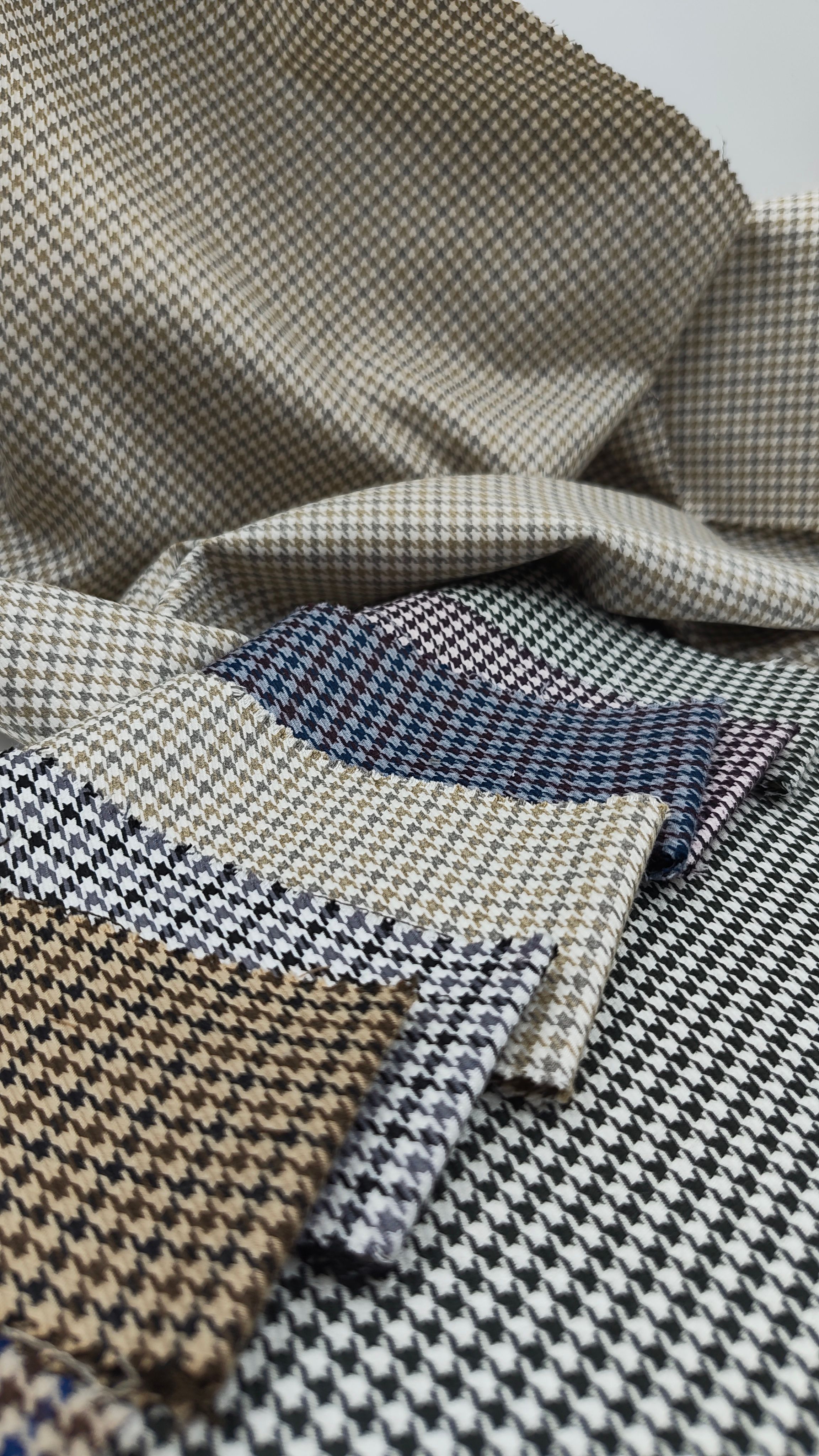
Houndstooth is one of those patterns everyone recognizes but few can actually name. That broken, four pointed check, somewhere between a herringbone and a checkerboard, has been circling fashion and interiors for nearly a century now, and it still hasn't gone out of style. Here's where it came from, and how to integrate it into your home like it naturally belongs there.
A pattern with a working class start
Houndstooth began in the Scottish Lowlands in the 19th century, woven into wool cloth for shepherds who needed something warm, durable and practical. It stayed a working fabric for decades. Fashion didn't really discover it until the 1930s, when New York menswear brand De Pinna put it into suiting in 1933, and Edward VIII posed in a houndstooth suit for Vogue the following year. That's when it started to be known as an upper class design rather than utilitarian.
Christian Dior did the most to cement that reputation. He introduced houndstooth into his 1948 collection, and by the 1950s it had become one of the house's defining signatures, even appearing on the packaging of the original Miss Dior perfume. Decades later, Alexander McQueen built an entire 2009 runway collection referencing Dior's houndstooth suiting. Other houses use the pattern too, Chanel, Balenciaga and Louis Vuitton among them, but it will always carry a little Dior in its DNA.
It's not just black and white
Houndstooth is almost always shown in black and white, but that's a styling choice, not a rule. The pattern works in any two tone combination: navy and cream, chocolate and camel, even a soft sage against ivory reads as houndstooth just as clearly. Changing the colorway is the easiest way to make it feel contemporary rather than nostalgic, and it also determines how loudly the pattern reads in a room. A tonal version in warm neutrals is far quieter than the classic black and white. That colour contrast allows you to use the pattern as both a statement and a quiet luxurious touch.
Fashion has also expanded far beyond the original scarves and suits. Today you'll find houndstooth on coats, blazers, pocket squares, sneakers, handbags and, increasingly, on upholstery, cushions and rugs at home.
How to bring it into a room
Houndstooth is a graphic pattern, so it behaves best as an accent rather than an everywhere print. A few ways to use it well.
Start small. A pair of cushions, a footstool or a lampshade in houndstooth introduces the pattern without committing an entire room to it.
Keep the rest of the room quiet. Because houndstooth already reads as busy up close, it pairs best with solid upholstery and simple lines around it, rather than a second bold pattern in the same space.
Choose your colorway on purpose. Classic black and white feels crisp and graphic, but closer to fashion than furnishing. A warmer, tonal colorway such as camel and ivory or navy blue and broken white reads as considered rather than costume, and sits more comfortably in a soft luxury home decor.
Let scale do some of the work. A larger, more open houndstooth weave feels more relaxed and contemporary. A tighter, smaller check reads more traditional and formal.
Used sparingly and in the right colorway, houndstooth does exactly what a good classic pattern should do. It adds a bit of history and a bit of edge to a room, without ever looking like it's trying too hard.
View How to Style Houndstooth on our Instagram
Keep reading



.png)
.png)